If you love the idea of more space but do not want to feel far removed from everyday errands, work, or school drop-offs, ranch-style living around Oklahoma City can be a smart middle ground. A lot of buyers picture this as a certain home design, but in the OKC market it is often more about the land, the layout, and the lifestyle that comes with it. When you understand how lot size, commute time, and property upkeep work together, you can narrow in on the right fit with a lot more confidence. Let’s dive in.
What ranch-style living means in OKC
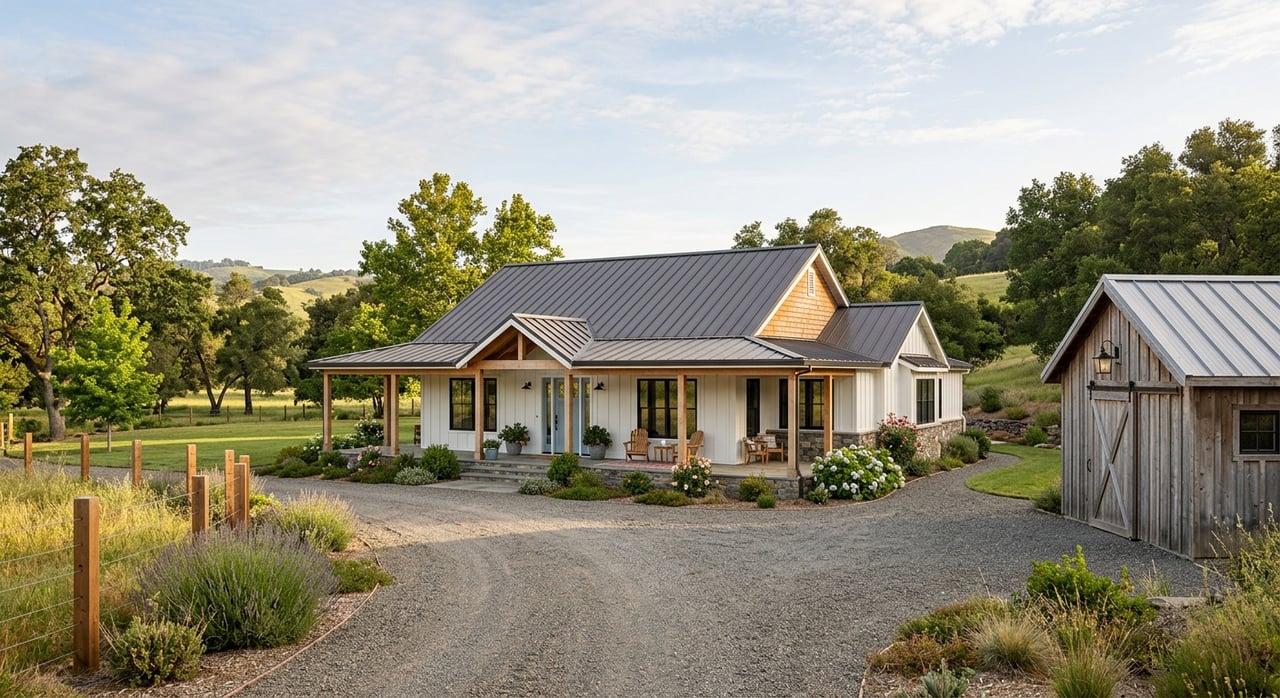
Around Oklahoma City, ranch-style living is usually less about one exact house style and more about how much room you want around you. Buyers are often comparing standard in-town lots with lower-density properties on the edge of the metro that offer more privacy, outdoor space, and flexibility.
Oklahoma City’s planning rules show just how wide that range can be. In some settings, the city allows 1 to 2 acre cluster lots, and subdivision regulations also allow five-acre rural subdivisions in selected zoning districts. At the same time, urban-medium guidance can still allow R-1 lots as small as 6,000 square feet.
That matters because your real choice is not just house versus house. It is really convenience versus elbow room, with maintenance and future use folded into the decision.
Where buyers look near Oklahoma City
If you want ranch-style living close to town, you are usually looking across a spectrum of communities rather than one perfect category. Some areas feel more suburban with a little extra breathing room, while others lean more rural and spread out.
Edmond and Yukon
Edmond is often a fit for buyers who want a fully serviced suburb with a modest commute. The city covers about 84.70 square miles, and the mean commute is 23.6 minutes. QuickFacts lists the median value for owner-occupied housing at $351,400.
Yukon is another closer-in option that can offer open space while keeping you tied into the metro. Its mean commute is 23.7 minutes, and the median owner-occupied value is $198,900. Yukon also publishes a separate rural residential trash schedule for homes outside city limits, which is a good reminder that service levels can change as you move toward the edge of town.
Mustang and Newcastle
Mustang can be a good middle-ground option if you want to balance land and convenience. The mean commute is 26.4 minutes, and the median owner-occupied value is $239,200. The city has also grown 20.3% since the 2020 Census base, which points to steady demand on the metro fringe.
Newcastle describes itself as a rural-suburban community with metropolitan amenities and access to I-35 and the HE Bailey Turnpike. Its mean commute is 27.5 minutes, and the median owner-occupied value is $271,800. Newcastle has grown 33.6% since the 2020 Census base, which shows how much attention this type of location is getting.
Piedmont, Blanchard, and Harrah
Piedmont is one of the clearest examples of a small-town and rural blend near the northwest side of the metro. The city says it covers over 43 square miles and offers a wide variation of building sites while staying minutes from major employers, airports, shopping, and health centers. The mean commute is 30.4 minutes, and the median owner-occupied value is $330,100.
Blanchard and Harrah show what happens as you move farther out. Blanchard has a mean commute of 28.7 minutes and a median owner-occupied value of $295,000. Harrah stretches farther with a 33.4-minute mean commute and a median owner-occupied value of $225,400.
The tradeoff comes down to three things
Most buyers looking for ranch-style living close to Oklahoma City end up weighing the same three questions. How far do you want to drive, what do you want to spend, and how much property do you really want to maintain?
Commute matters more than buyers expect
Oklahoma City’s mean commute is 22.2 minutes. That is your baseline when you compare edge-of-metro communities.
Some locations barely add much drive time. Edmond is 23.6 minutes and Yukon is 23.7 minutes, which is only a small jump from Oklahoma City. Others ask for more of your day, like Piedmont at 30.4 minutes or Harrah at 33.4 minutes.
If you are aiming for more land, it helps to decide early what your max daily drive feels like. That one number can rule in or rule out a lot of properties fast.
Budget is not always lower farther out
A bigger lot does not always mean a lower price. Oklahoma City’s median owner-occupied value is $231,300, but nearby communities land on both sides of that number.
Yukon comes in lower at $198,900. Mustang is slightly above at $239,200, while Newcastle is $271,800, Blanchard is $295,000, Piedmont is $330,100, and Edmond is $351,400.
That tells you something important. Land is only one part of the price. Location, age of construction, and demand for larger parcels can all shape what you pay.
Upkeep is the hidden cost
More land often means more owner responsibility. That can include mowing, fencing, drainage, long driveways, and more seasonal work throughout the year.
It can also include systems you may not deal with on a typical in-town lot. The Oklahoma Department of Environmental Quality says on-site sewage systems require an Authorization to Construct before installation, and periodic pumping is essential. DEQ also says privately owned wells are not regulated by federal or Oklahoma governments for ongoing water safety, which leaves testing and maintenance in the homeowner’s hands.
That does not mean acreage is a bad idea. It just means you want to go in with your eyes open about what the property asks from you after closing.
A practical way to shop smarter
When buyers start looking at ranch-style properties around Oklahoma City, it is easy to get distracted by the view, the shop, or the extra acreage. Before you fall in love with a place, it helps to walk through a few practical questions.
Start with maintenance capacity
Ask yourself how much land you can actually maintain through every season. More space sounds great, but the day-to-day work adds up faster than many buyers expect.
If your weekends are already packed, a smaller parcel closer to town may fit your life better. If outdoor work is part of the lifestyle you want, then more acreage may be worth it.
Check for well and septic
If a property has a private well or septic system, make sure you understand what that means. DEQ makes clear that private wells are the owner’s responsibility, and on-site sewage systems are regulated separately from city sewer service.
That changes both your maintenance plan and your due diligence. It is one of the biggest differences between an in-town home and an acreage-style property.
Verify zoning and allowed uses
Do not assume that more land means unlimited options. Oklahoma City’s zoning and subdivision rules control how land may be used and what standards apply.
If you are thinking about adding structures or making other changes over time, verify those details early. It is always better to confirm what a property allows than to guess based on lot size alone.
Decide your commute ceiling
The local range is wide enough that this question can shape your entire search. If you want to stay close to Oklahoma City’s 22.2-minute baseline, you may focus more on Edmond or Yukon. If you are comfortable with a longer drive, Piedmont, Blanchard, or Harrah may give you more of the land-first feel.
There is no universal right answer here. The best fit depends on what you want your normal week to feel like.
Ask whether the lifestyle justifies the payment
Some buyers expect that moving farther out will always save money, but the current numbers do not support that across the board. In this market, some closer-in places cost less, and some farther-out places still carry a premium.
A better question is whether the land, privacy, and flexibility are worth the monthly payment and the added upkeep. That is usually where the right answer becomes clearer.
Why local guidance helps
Ranch-style living around Oklahoma City is not one-size-fits-all. It can mean a little extra breathing room in a closer-in suburb, or it can mean a more rural property with systems and service patterns that look very different from city living.
That is why local guidance matters so much. When you look at these properties through a practical lens, from commute and zoning to upkeep and long-term fit, you can shop with a lot more clarity and avoid surprises later.
If you are trying to find the right balance between convenience and open space around OKC, Rachel Cosby can help you compare communities, understand the real tradeoffs, and find a property that truly fits how you want to live.
FAQs
What does ranch-style living mean around Oklahoma City?
- Around Oklahoma City, ranch-style living usually refers more to lot size, privacy, and outdoor space than to one specific house design.
Which Oklahoma City area communities offer more space close to town?
- Buyers often look at Edmond, Yukon, Mustang, Newcastle, Piedmont, Blanchard, and Harrah, each with a different mix of commute time, price point, and rural feel.
How much longer is the commute from edge-of-metro areas near Oklahoma City?
- Oklahoma City’s mean commute is 22.2 minutes, while nearby examples range from 23.6 minutes in Edmond to 33.4 minutes in Harrah.
Is ranch-style living near Oklahoma City always more affordable?
- No. Current figures show that some farther-out communities have higher median owner-occupied values than Oklahoma City, so price depends on more than distance alone.
What should buyers check on acreage-style properties near Oklahoma City?
- Buyers should look closely at land maintenance, whether the home uses a private well or septic system, what zoning allows, and how much extra commute time they are comfortable with.